Insfers is a B2B + B2C stablecoin payments platform built entirely on-chain. The Ugly Studio designed the merchant dashboard, payer checkout flows, developer console, and a full design system — 118+ screens across two versions, dev-ready in Figma.
Crypto payments still feel like developer tooling. Most platforms show raw transaction hashes, wallet addresses, and chain IDs without explaining what any of it means for the person trying to run a business. Merchants need Stripe-level clarity. Payers need checkout that works like Venmo.
Insfers makes USDC payments feel effortless — for the merchant accepting them, the customer paying, and the developer integrating. We designed every screen, state, and edge case across the full platform.
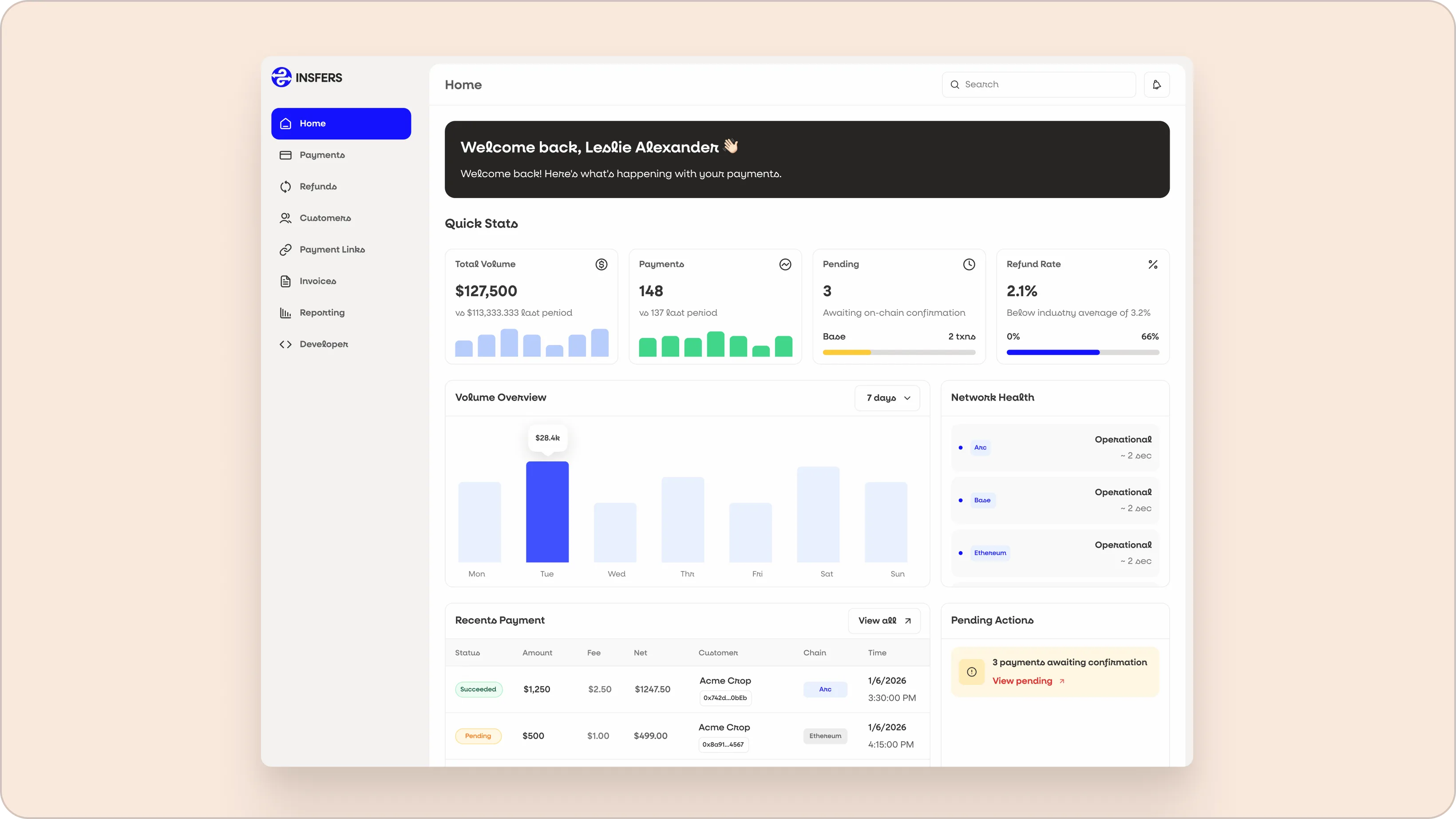
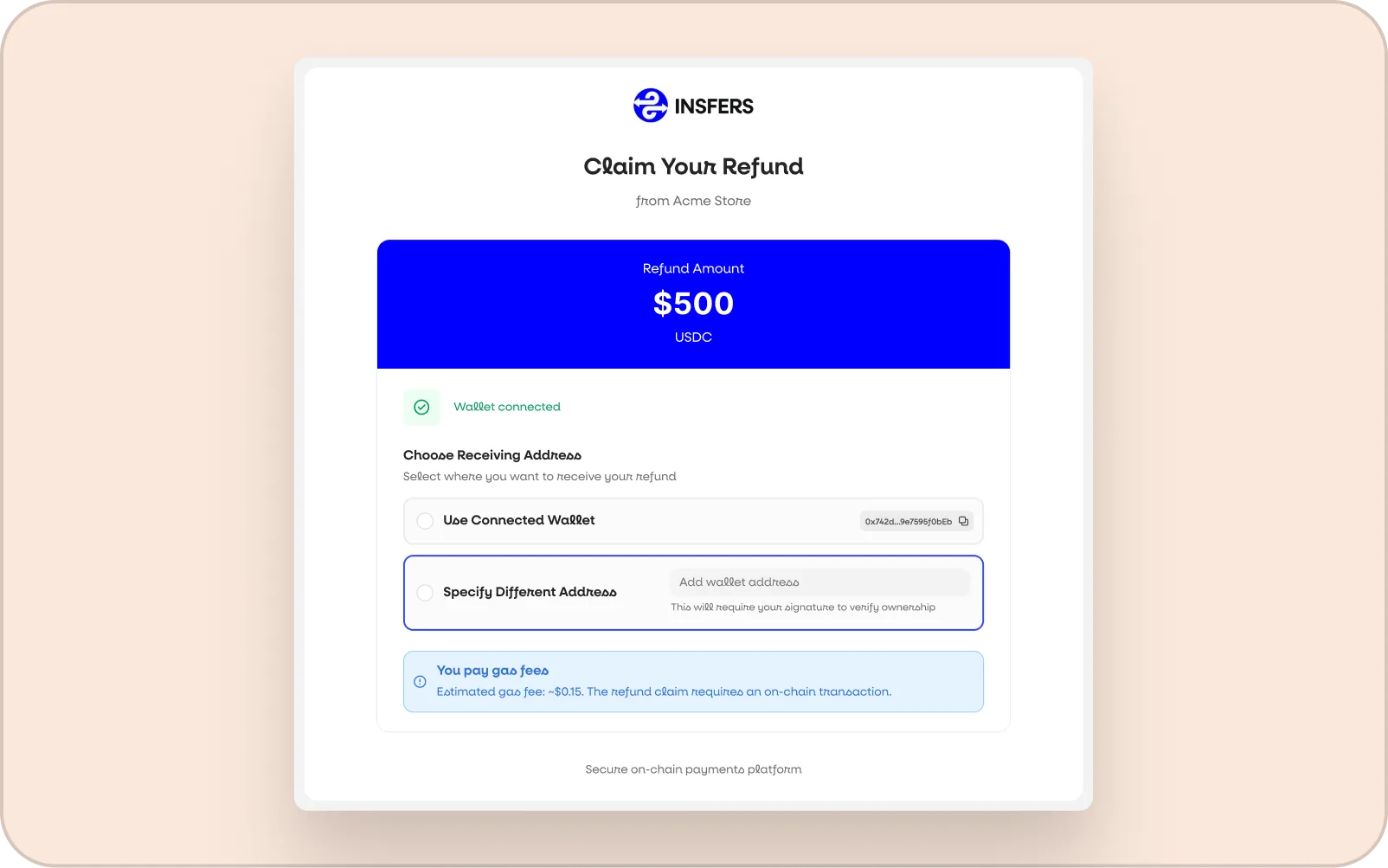
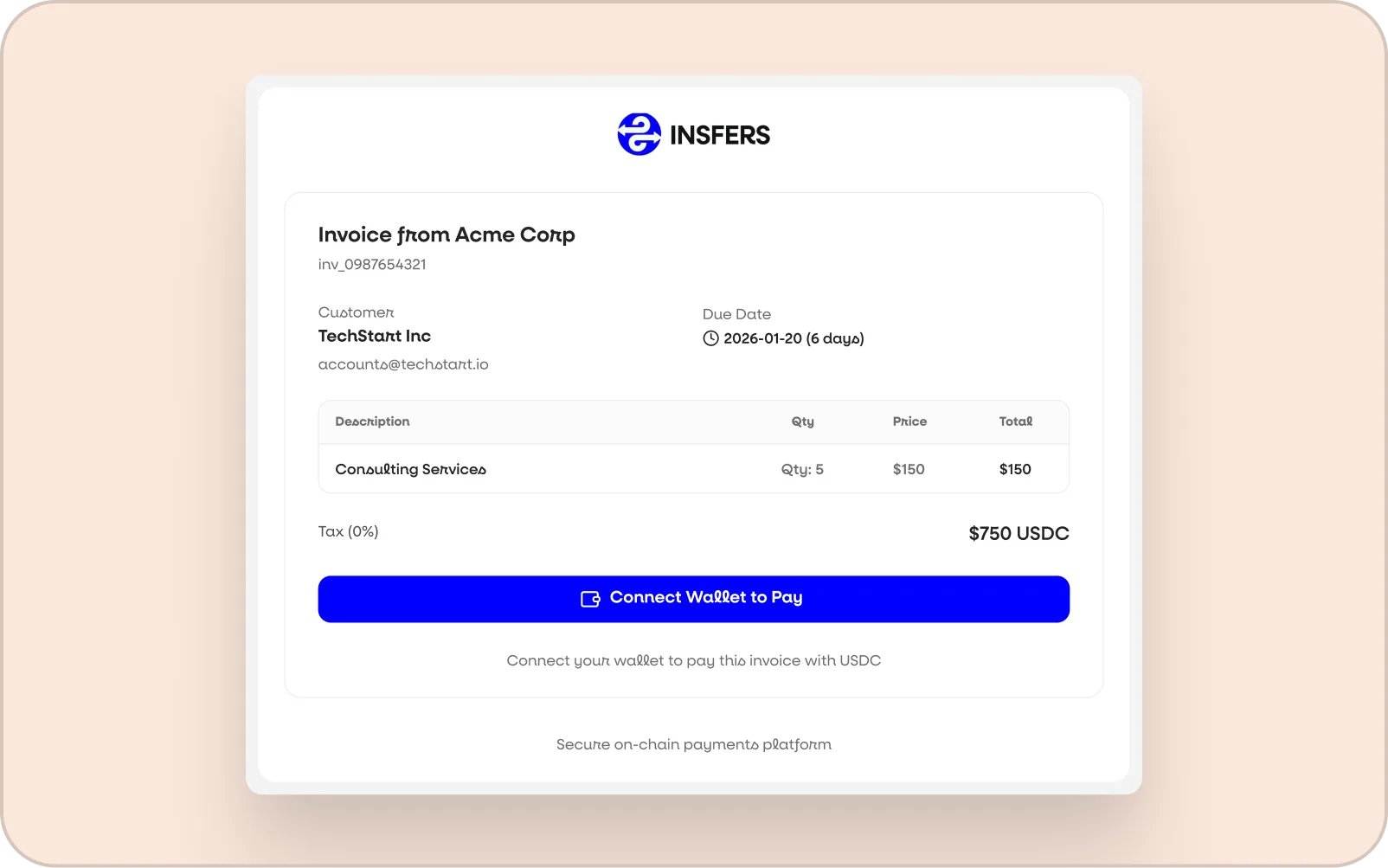
We designed three connected experiences. The merchant dashboard handles payments, refunds, customers, invoices, payment links, reporting, and settings. The payer checkout makes USDC transactions feel as simple as a card payment — wallet connect, approval step, confirmation tracking, receipt. The developer console gives engineers API keys, webhooks, logs, and a full test mode.
On-chain payments have rules that don't exist in traditional fintech. Transactions are irreversible. Refunds are new transactions, not reversals. Wallets can be on the wrong chain. We designed every state — wrong chain, insufficient balance, pending confirmations, claimable refunds — so the interface is honest about what's happening without confusing the user.
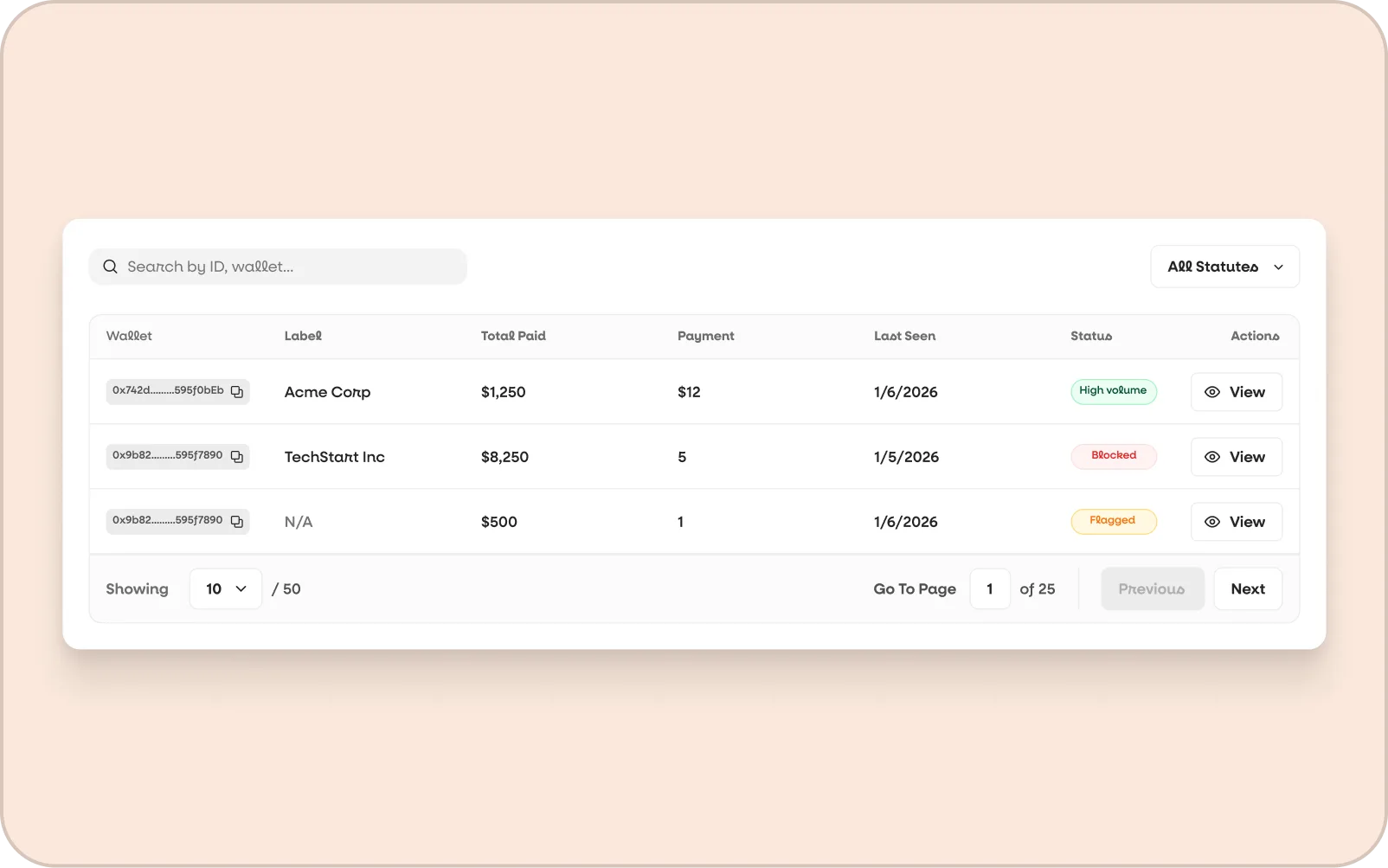
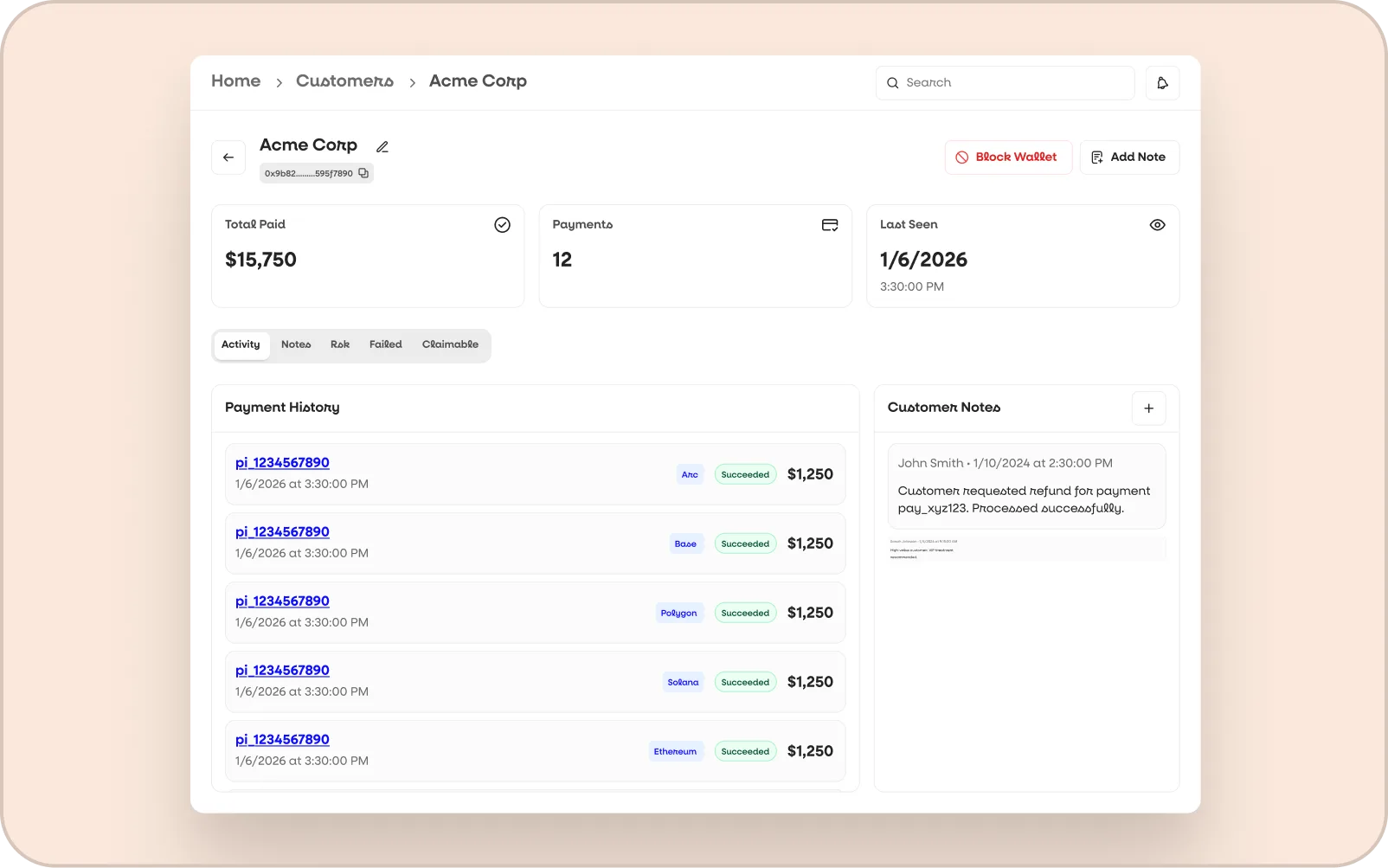
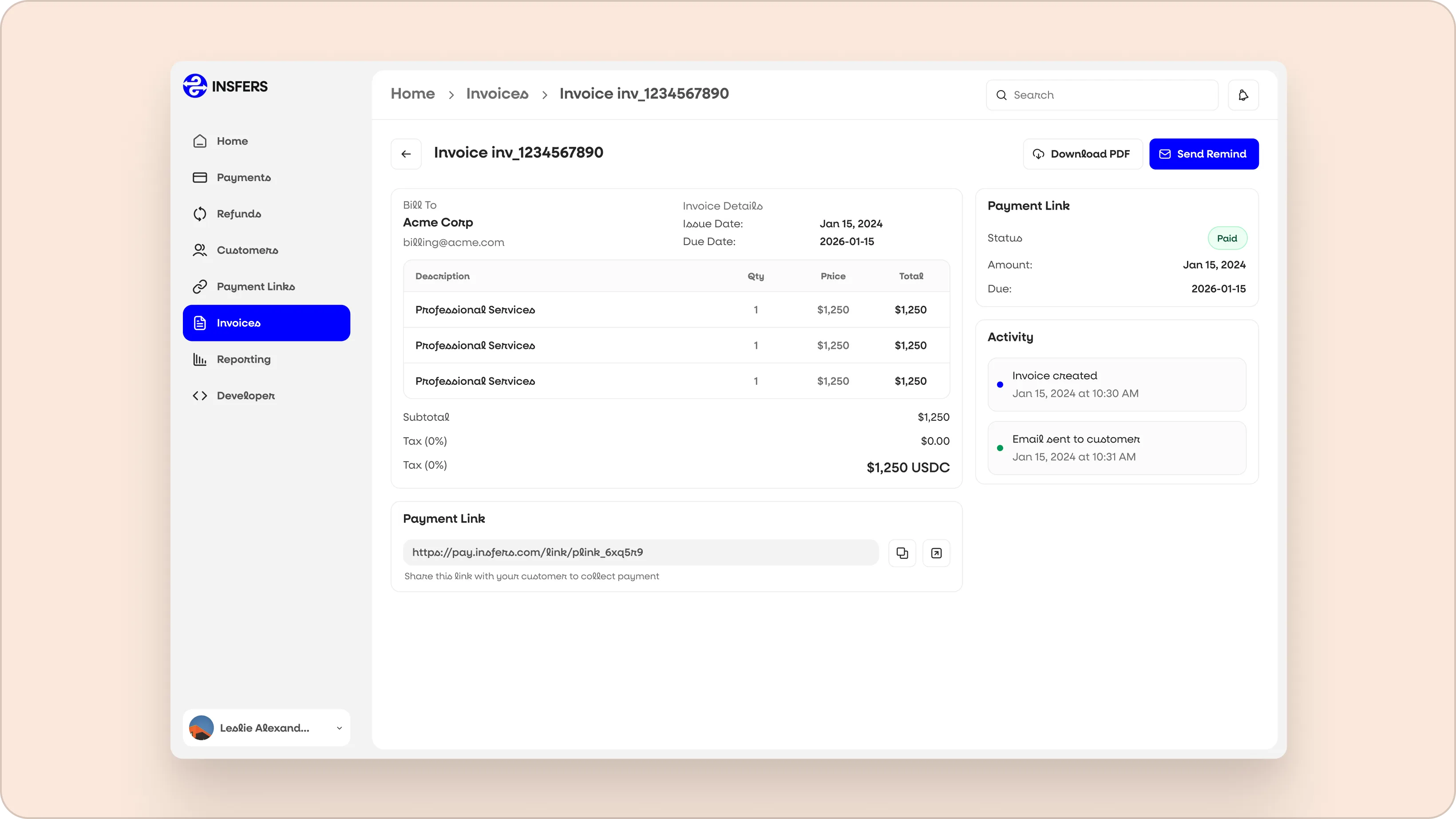
Web3 products tend to look either overly technical or overly flashy. Neither earns trust from a merchant handling real money. We designed Insfers to feel like financial infrastructure — clean, precise, and confident. The kind of interface where you trust the numbers because the design respects them.




Status pills, wallet chips, chain badges, and explorer links appear across every screen. Color maps to transaction state — green for succeeded, amber for pending, red for failed. The system is consistent from the merchant dashboard to the payer checkout.
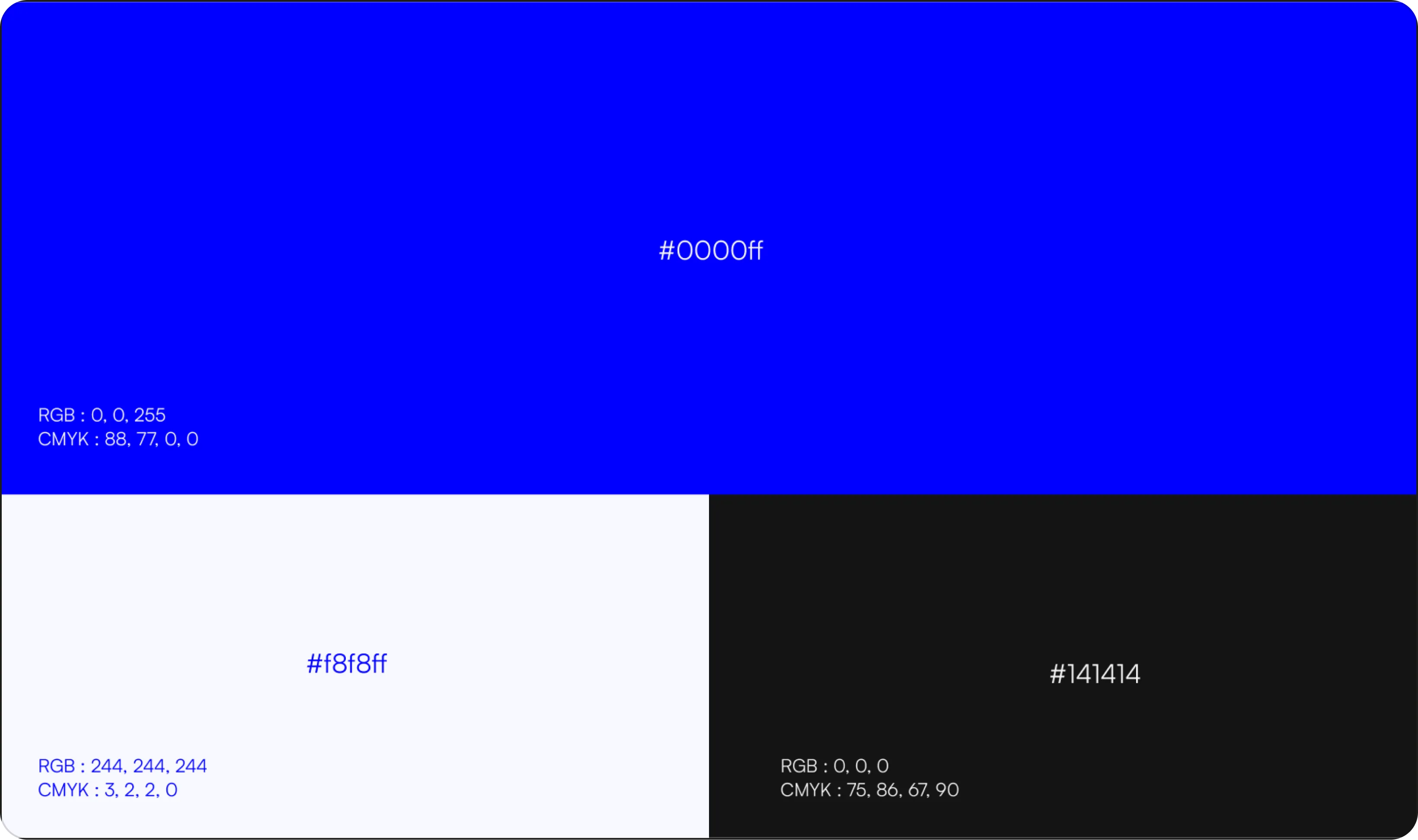
A full component library — status pills, wallet chips, chain badges, tables with bulk actions, detail drawers, confirmation modals, steppers, timelines, and skeleton loaders. Every component handles loading, empty, error, and permission-denied states out of the box.
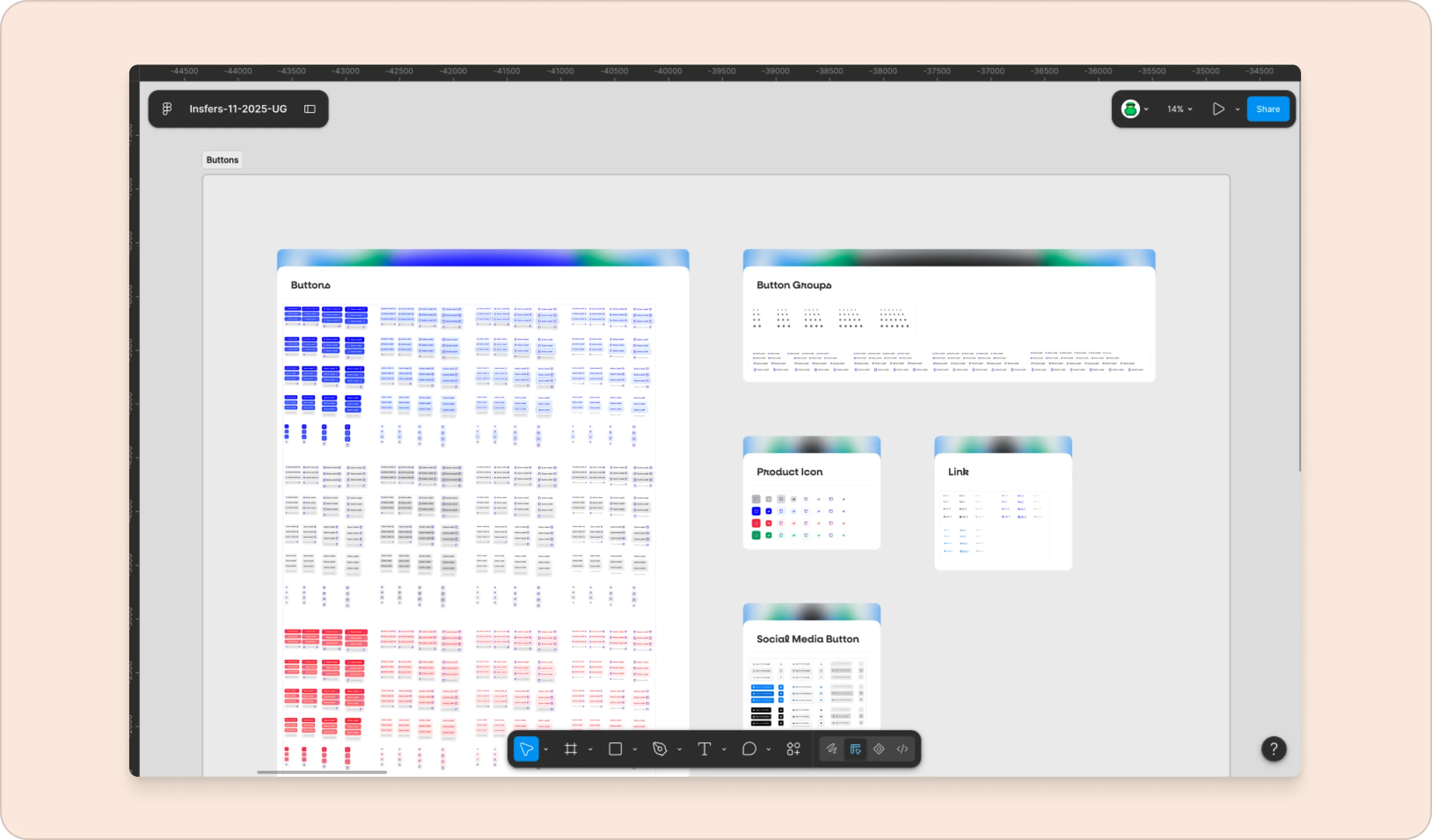
The design system covers both the merchant dashboard and the payer-facing checkout. Here's how it holds up across different parts of the platform.
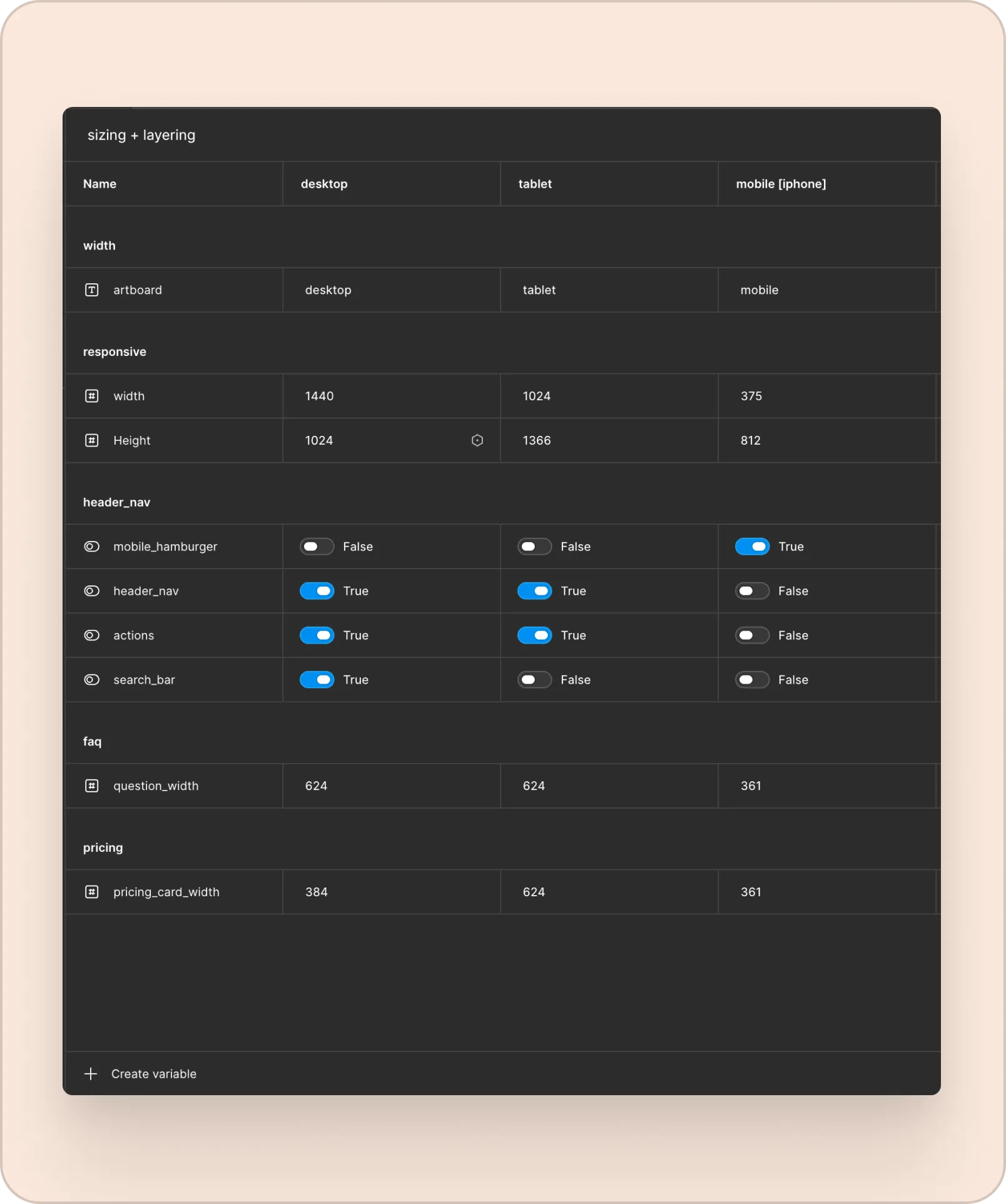
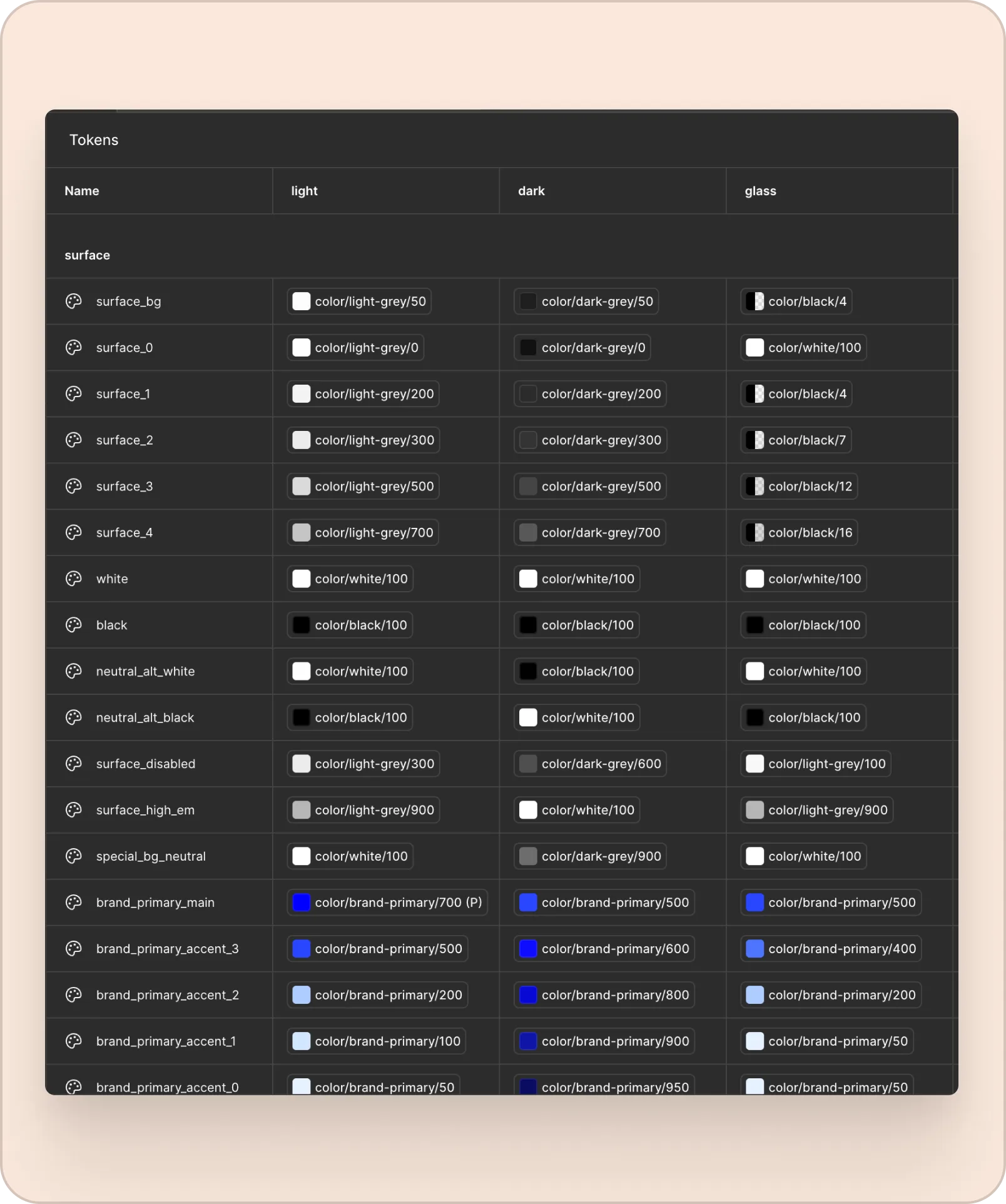
118+ screens. Three connected experiences. Full state coverage for every on-chain edge case. Insfers went from product spec to dev-ready Figma in under six weeks — a complete payments platform that makes USDC feel as simple as swiping a card.